Companies today go through a major dilemma: while there are numerous ways of connecting with potential employees, it still does not seem possible to make wise recruiting decisions fast. Qualified candidates leave in the middle of the process, and positions remain open for a long time. These pitfalls increase corporate expenses, deplete recruiters’ energy, and damage employers’ reputations.
As per IBM Consulting’s® AI-first HR expert, Kim Morick, top talent stays on the market for an average of 10 days. Because of the notable change in today’s workplace, the effects of a subpar hiring procedure compound.
In another survey by IBM done on 750 CEOs, 87% of corporate executives think that having the right people in the right roles is crucial to embracing the full potential of an AI-enabled future. According to a Deloitte survey, 93% of employees think that an organization’s success depends on going beyond the typical job construct. Adaptability might now be just as important as previously learned abilities, and agility is essential for recruiting managers and the talent pipeline. Speed is a major factor in an effective recruitment strategy, but making better decisions along the road and cutting down on wasted effort is crucial.
Over the years, recruitment teams have shifted towards technology and AI in their day-to-day operations; also, the latest tools have made it possible for prospective employees to bombard companies with resumes through various sourcing channels.
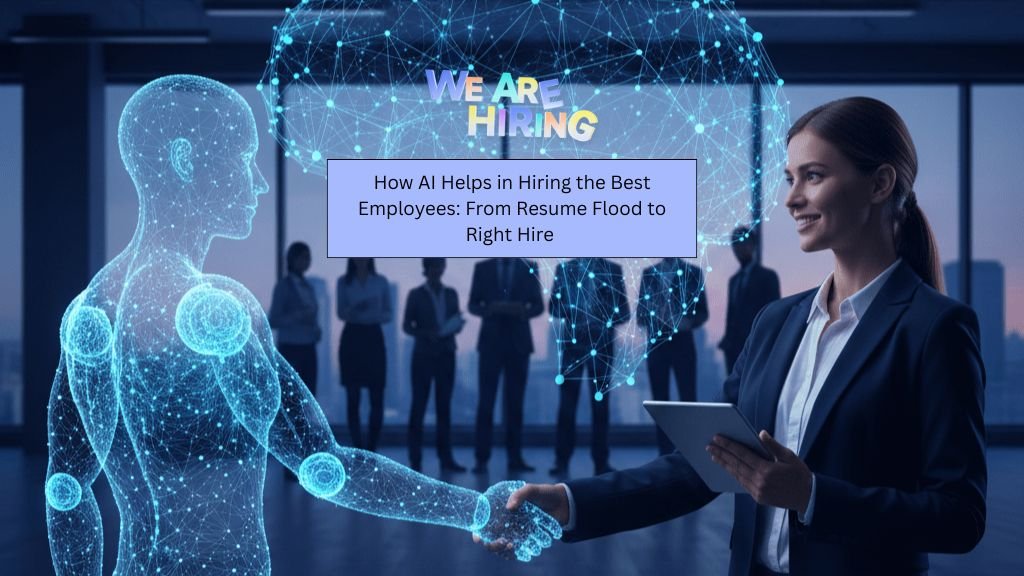
In this article, we are sharing some effective strategies for incorporating AI into your hiring procedure to identify top candidates.
How Does AI Help in Hiring and Recruitment?
- Creating Job Descriptions: One of the easiest and most practical uses of AI is to support creating job descriptions and marketing materials for available opportunities. But AI’s capabilities extend much beyond these time-saving applications.
- Find applicants for the positions: Many small firms lack access to a database of potential hires. They do not get much traffic to their first job posting. Because of this, they might go for applicants on their own or risk hiring someone who isn’t qualified for the position. Both of these choices may be resource-wasting and time-consuming. By searching the best job sites for applicants that fit the requirements of your job posting, AI solutions like Ideal, LinkedIn Recruiter, and Workable can save you a huge amount of time.
- Shortlist the right candidate: AI can help find top talent that otherwise wouldn’t make the shortlist, but it shouldn’t be used to make the final call in recruitment and hiring decisions. Hiring teams can devote more of their time to creating strategic goals and creating a favorable candidate experience.
- Conduct quicker screening: In addition to being time-consuming, traditional methods of reducing a pool of applicants, such as reference checks, phone interviews, and resume screening, aren’t always reliable indicators of success. AI tools streamline the entire process.
- Minimize unfair practices: It takes a lot of hard work to ensure fair practices throughout our hiring process. Finding underlying structural prejudices in your organization is the first step towards eliminating bias. Using a program like Textio to write inclusive descriptions might help you focus on your abilities and appeal to a wide range of readers. When all candidates are evaluated using the same criteria during the hiring process, evaluations become more equitable and consistent.
Bottom Line
These are some ways you can use AI to find the best employees. Before going for any particular AI tool, spend some time exploring and understanding potential solutions and ask the relevant company for demos or trials based on their own company’s experience with AI in the recruiting and recruitment process. This practical approach will enable you to evaluate the features, usability, and compatibility of various tools with your organization’s needs. Before the final implementation, evaluate how the new AI-based solution will function with whatever workforce management or HR tools you currently have.
While AI can save you time and resources in the hiring process, do not rely completely on the technology; human connection is pivotal in hiring and recruitment.