
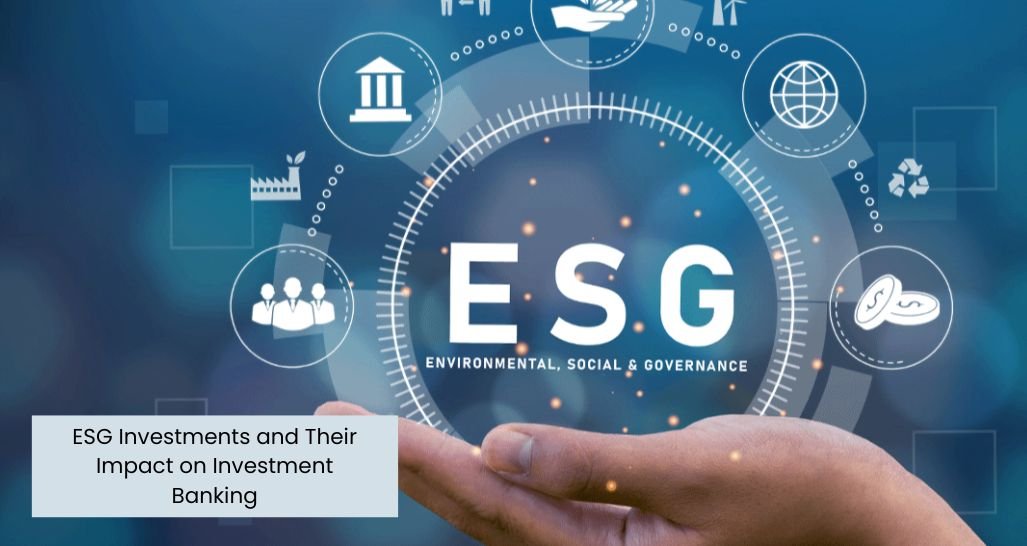
Investing in environmental, social, and governance (ESG) issues is one of the major changes that has affected the global financial sector. In recent years, investors have been paying more attention to corporate governance, ethical behaviour, and sustainability when making investment decisions. Because of this transformation, investment banks now play a big role in helping ESG-driven financial operations and guiding firms toward more environmentally friendly business plans.
The Growing Importance of ESG Investing
When you invest in ESG, you look at three basic things: how environmentally responsible a company is, how it affects society, and how well it runs its business. Climate change, carbon emissions, and resource management are all environmental challenges. Social considerations include the well-being of employees, diversity, and being involved in the community. Governance, on the other hand, is about being open, having good corporate leadership, and making moral choices.
There has been a lot of interest in sustainable investments in the past several years. Increasingly, institutional investors, pension funds, and asset managers are putting companies that operate responsibly at the top of their lists. Younger investors are more willing to put their money into companies that share their ethical and environmental ideals. Because of this, investment funds and financial products that focus on ESG have grown a lot in markets around the world.
Transformation of Investment Banking Services
Because of the advent of ESG investing, investment banks have had to change a lot of the services they offer. Investment banks used to mostly help companies get money, give advice on mergers and acquisitions, and underwrite securities. These basic services are still very important, but banks today think about ESG factors in almost every element of their operation.
One important difference is that more people are using sustainable financial solutions. Investment banks are getting more active in issuing green bonds, social bonds, and loans that are linked to sustainability. These financial methods are aimed to pay for projects that use renewable energy, benefit the environment, adapt to climate change, and make people’s lives better. Investment banks help put money into projects that will help the environment in the long term by organising and financing these tools.
Impact on Corporate Financing and Capital Markets
ESG investing is also influencing how companies get money and how capital markets work. When looking at companies for public offerings or big loans, investors are paying more attention to how well they do on ESG. Companies with good ESG histories frequently have more investor trust and easier access to funding.
Investment banks are putting more emphasis on a company’s ESG commitments as part of the investment story during initial public offerings (IPOs) and bond issuances. Investors may be more interested in companies with good sustainability initiatives. This can lead to greater values and cheaper financing costs.
Technology and ESG Data Analysis
Technology is very important for making ESG investment possible. We are using increasingly advanced techniques for data analysis, AI, and machine learning to get a better picture of how companies are doing on ESG. Investment banks look at a lot of environmental and social data to figure out what dangers and possibilities investments might have.
Technology can help, for instance, figure out how much carbon a firm puts out, keep an eye on how sustainable its supply chain is, or look at how well it runs its business. These insights help investment banks give better advice to both individual and business clients.
Challenges Facing ESG Integration
ESG industry is growing swiftly, but there are still many problems that need to be fixed. One of the key problems is that there are not any clear rules for how to talk about ESG. It is tricky to compare firms because different groups and rating agencies measure ESG success in different ways.
Another issue to worry about is “greenwashing,” which is when firms misrepresent or brag about what they have done for the environment to entice consumers to buy their stocks. Because of this, banks and regulators want ESG reports to be more honest and open.
The Future of ESG in Investment Banking
In the future, ESG investing is likely to have an even bigger impact on the financial industry. Governments all over the world are making new rules that say businesses must tell people about the hazards to the environment and society. These rules will probably make more people want investment institutions to offer ESG advising services.
At the same time, investors are becoming more conscious of the financial dangers that come with climate change, social inequality, and bad governance. Because of this, sustainable investing is becoming more popular as an investment strategy.