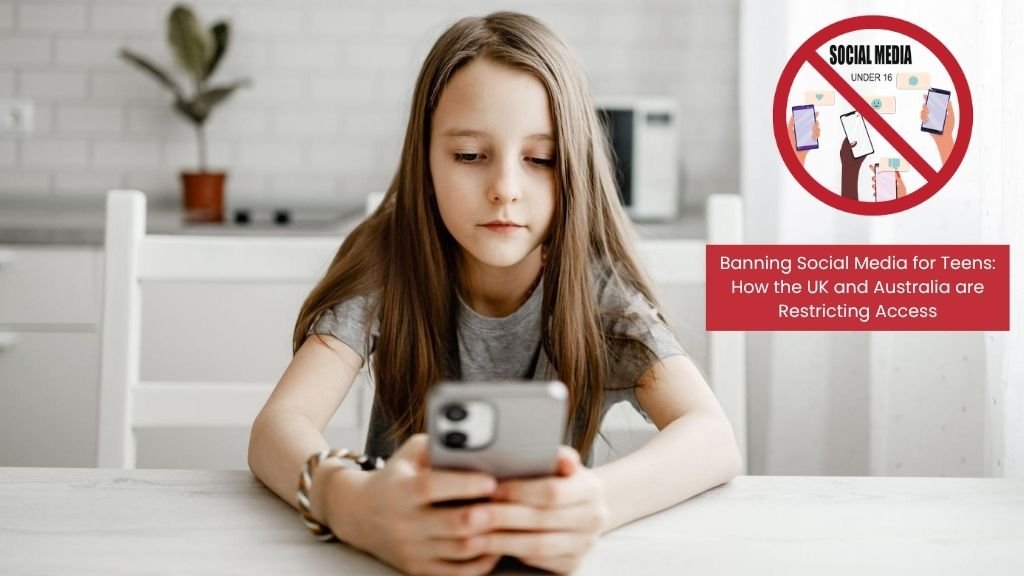
The increasing use of social media, especially among teenagers, has become a serious concern. It’s challenging for parents to know what to do with this technology. Governments throughout the world are investigating the impact of social media and screen time on kids, and many have already implemented stricter regulations or outright bans.
UK Government Bans Social Media for Teens
Recently, the UK government banned social media for individuals under 16 years old. As reported, from the spring of next year, they will not be able to use social media sites like Facebook, Instagram, YouTube, TikTok, Snapchat, and X. Additionally, livestreaming and stranger communication, including in gaming, will also be turned off by default.
When he announced the UK ban, Sir Keir Starmer reiterated this, stating that “social media is making youngsters miserable” and that “in our society,
Australia’s Decision on Social Media
Earlier this year, Anthony Albanese, the prime minister of Australia, implemented similar restrictions. While making this new rule, he stated that it would “keep children safer, take the pressure off parents, and give young people more time to just be kids.”
In response, a number of social media companies, such as Meta, YouTube, and Snapchat, stated that while they are in favor of keeping kids safe, they are worried that a ban will encourage kids to use less secure, unregulated sites.
Growing worries about the dangers of living online, such as design elements that encourage youth to spend more time on screens and content that could be harmful to their health and welfare.
The Main Reason behind the Ban
According to research, some significant features of social media can have a detrimental effect on the mental health of teenagers.
One reason science is catching up with technological improvements and resulting in legal changes is the social media age delay.
Naturally, social media has both positive and negative aspects.
However, let’s understand some common drawbacks of social media and how they affect your brain to understand the causes of the age delay.
When using social media, your brain gets a “dopamine hit.” Dopamine is a feel-good neurotransmitter in the brain that is triggered by social media. Social media can rewire the brain to seek more and more social media information, making it addictive, according to recent research. Further, it is easy to unintentionally doomscroll or dreamscroll for hours on end thanks to the “bottomless feed” (the unending scroll).
Adults are also impacted by this, but kids’ brains are particularly affected since the dopamine alterations they undergo may be permanent or at least long-lasting.
Range of Negative Content
Social media algorithms are made to make it difficult to “switch off” and to keep you on their site for extended periods of time. In addition to displaying content that you like or follow, the algorithm may also display:
- Rage-bait is extreme content that intentionally agitates you because angry people click, comment, and share more than happy people do.
- “AI slop” is low-quality AI-generated misinformation and disinformation, also known as “fake news,” that intentionally or unintentionally misleads you; the algorithm doesn’t distinguish between fact and fiction and will only share content that is popular, even if it is false; content that is actively harmful to you, such as that which causes trauma or mental health problems It causes you to feel upset, such as “doomscrolling” advertisements.
- There are a lot of advertisements urging you to buy, buy, buy! Every day, teenagers are exposed to thousands of ads. These advertisements have the potential to lower your level of life happiness, increase your impulsivity, particularly when it comes to money, and encourage overconsumption.
Combining all of these factors can result in “cognitive overwhelm,” a form of stress, tiredness, and burnout that can exacerbate feelings of anxiety or depression.
Better Alternative Instead of Complete Ban
Many experts believe a multi-layered approach creates a balance between skill development, access, and protection. Some major safety measures include limiting targeted advertising, better moderation, default private accounts for minors, and fewer algorithmic recommendations on youth accounts TO minimize negative effects while maintaining positive ones.
There might be time limitations and friction to discourage compulsive use without removing access, including bedtime locks, daily time caps, and “friction” prompts.
Teens can be educated and empowered to use platforms responsibly through school curriculum and family programs that educate media literacy, algorithmic awareness, emotional coping skills, and online safety.
Platforms should be accountable for regulation, including compulsory safety features, algorithm transparency, and enforced sanctions for blatant failures.