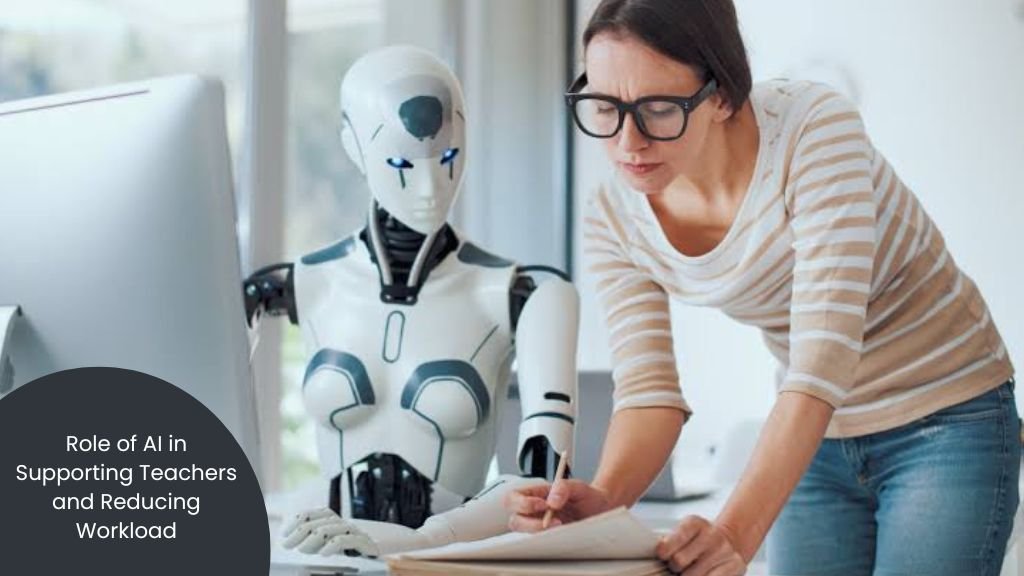
Teachers today must do a lot more than just teach. They also must plan lessons, grade papers, do administrative work, and keep students interested. This growing burden often causes teachers to burn out and work less efficiently. But the use of artificial intelligence (AI) is changing the way teachers do their jobs by giving them useful tools to make their jobs easier and improve their teaching. AI for teachers is not meant to replace teachers; it is meant to give them tools that help them be more productive and teach better.
Transforming Classroom Management with AI
Every day, artificial intelligence plays a significant role in making classroom management easier. Keeping an eye on how well kids are doing and keeping track of attendance are two examples of duties that can be automated by smart technology. These responsibilities required a significant amount of effort from teachers in the past. Teachers can make quick decisions that are well-informed thanks to the technology that provide them with real-time information about how pupils are behaving, how involved they are, and how well they are doing and how well they are doing.
Dashboards that are powered by artificial intelligence make it simple for educators to identify students who require additional assistance, allowing them to deliver individualised assistance to those students. The use of this targeted strategy not only improves the academic performance of children, but it also makes the work of educators simpler, allowing them to devote more time to pupils in ways that are more significant.
Automated Grading Systems: Saving Time and Improving Accuracy
Grading tests and homework is one of the things that takes teachers the most time. Automated grading systems have changed the game in this field. Using natural language processing and machine learning methods, these systems can grade multiple-choice tests, short responses, and even essays.
There are two benefits. First, teachers save a lot of time by not having to grade papers by hand. Second, AI ensures that evaluations are fair and consistent, and it cuts down on human prejudice. Students can also get feedback right away, which helps them comprehend their faults and get better faster.
Some teachers were worried at first about how accurate automated grading was, but AI technology has come a long way since then, making it far more reliable. Teachers can also look over and change marks that AI gave, making sure that human judgment is still a part of the process.
AI Lesson Planning: Enhancing Creativity and Efficiency
AI is also having a big effect on lesson planning. AI lesson planning tools help teachers make structured lesson plans that meet curricular requirements, student needs, and learning goals in only a few minutes.
These programs look at a lot of educational data to propose useful content, exercises, and ways to test students. Teachers can change these ideas to fit their own way of teaching, which makes the process both quick and adaptable.
Personalized Learning and Student Support
AI-powered platforms let students study in a way that works best for them by changing the content based on how fast they learn and what they like. This makes it easier for teachers to meet the needs of all their students.
AI can suggest extra resources for students who are having trouble and more advanced stuff for students who are doing well. AI takes care of routine changes to lessons, which lets teachers spend more time mentoring, leading, and getting to know their students’ needs that cannot be done by machines.
Streamlining Administrative Tasks with Education Automation
A lot of a teacher’s time is spent on organizational tasks like scheduling, reporting, and keeping records. AI-powered education automation makes these jobs easier by automating tasks that need to be done repeatedly.
AI tools can write reports, keep track of calendars, and even send parents automated updates to keep them in the loop. This cuts down on paperwork and makes mistakes less likely.
Because of this, teachers can spend more time teaching and less time doing paperwork. Schools also benefit from better data management and more efficient operations.
Supporting Professional Development
AI is helping instructors do their jobs better by giving them tailored teaching and feedback. Machine learning algorithms can look at how teachers are doing things now and offer ways to make them better. They can make suggestions for professional development courses, educational resources, and new ways to teach that are specific to each student’s requirements.
Challenges and Considerations
There are problems with using AI in education, even though it has many benefits. We need to be very careful when we talk about data privacy, algorithmic bias, and relying too much on technology. Schools must make sure that AI tools are used in a fair and open way.
Teachers also need to learn how to use these tools well. Even the best AI technologies may not work as well as they could without the right training. Finding a balance is also vital. AI should help teachers, not take the place of the personal touch that is so important for learning. Technology cannot copy things like emotional intelligence, empathy, and being a mentor.
The Future of AI in Education
The future of AI in education appears bright, and it will only become better as it continues to improve. As tools grow easier to use and understand, more schools and organisations throughout the world are expected to start using AI for teaching.
New developments in automated grading systems, AI lesson planning, and education automation will keep coming, which will make teaching easier and more efficient. AI lets teachers focus on what really matters by reducing teacher workload: developing young minds and cultivating a love of learning. It does this by making their jobs easier.
Conclusion
Schools are changing because artificial intelligence is taking a lot of work off teachers’ plates. By using smart technologies and automation, teachers may increase the quality of the learning experiences they offer their pupils, make their work easier, and get more done.