
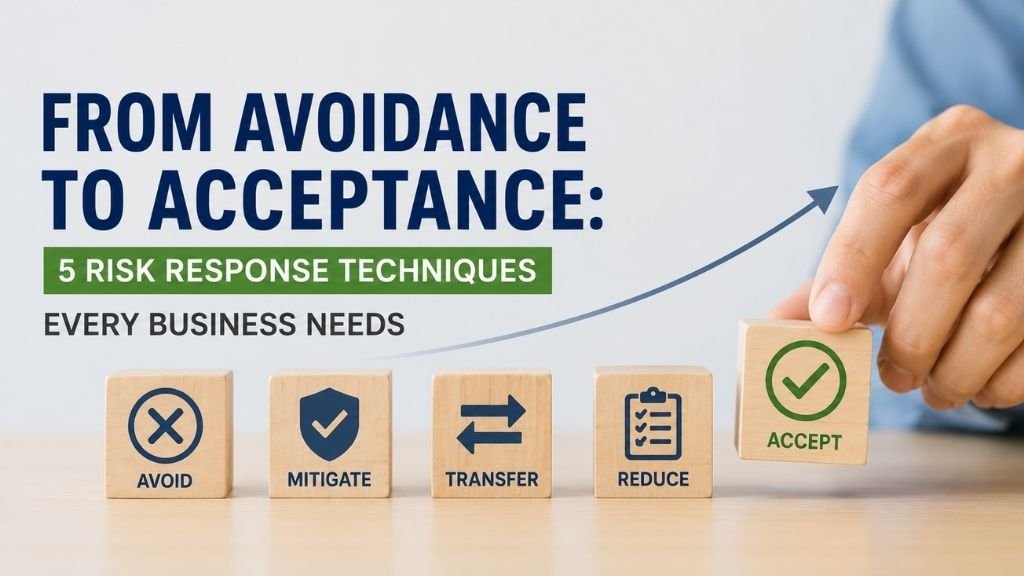
Risk is considered a danger in the business realm. But in reality, risk is not what stands in the way of your plan. To completely avoid it, turn the question around. Instead of posing it as “What could go wrong?” think, “What needs to go right for us to win?” Risk response plans are the road map for companies navigating the volatile landscape of contemporary markets. A risk response strategy is about putting your company in a position to succeed no matter what happens, not only about playing defense. Risk response strategies offer an effective way to recognize possible challenges, assess their consequences, and explore the best course of action. These tactics ensure that companies are prepared to deal with uncertainty with assurance.
Different Risk Response Techniques
Every business has its share of hurdles and successes. Because of this, risk response plans are essential; they are the airbags, seatbelts, and GPS that support businesses in dealing with unforeseen circumstances while remaining on course.
Let’s explore the different kinds of risk response tactics and find out how they enable companies to transform challenges into opportunities.
- Avoid Risks
Avoid dangerous risks by making a detour to get out of traffic. Sometimes it’s best to avoid taking any risks at all. Companies use this tactic by deciding against pursuing specific initiatives, markets, or methods that are highly unpredictable. Avoidance is most effective when the organization lacks the resources to manage the risk or when the risk exceeds the potential rewards.
What happens if you are unable to get out of the traffic jam? To reduce the wait time, you might use a navigation app to determine the fastest path. In a similar way, risk reduction seeks to decrease a risk’s probability or intensity. It includes enhancing procedures and systems to stop fraud or mistakes, using predictive analytics to foresee possible interruptions, and ensuring groups are prepared to deal with obstacles.
- Outsourcing
Ensure seamless operations in an emergency situation; use insurance to cover potential damages during shipment. Accepting the Unavoidable: Not every risk can, or should be, shifted, minimized, or avoided. Acceptance is the best course of action when a risk outweighs its possible consequences. This strategy entails establishing and keeping track of acceptable risk levels and creating backup plans to deal with potential repercussions, which is part of preparing for outcomes.
- Contingency Planning
The hidden hero of risk management is a proactive backup plan. Although it is not a stand-alone risk-response approach, it enhances the others by ensuring that companies have a ready-made “Plan B.” This should include reducing supply chain risks by securing backup suppliers and forming specialized teams to handle unforeseen disruptions.
- Blending Techniques
Businesses use a variety of risk response techniques to take a comprehensive approach. Your risk response plans should include the organization’s objectives, available resources, and risk tolerance because they are not one-size-fits-all. Risks are as unavoidable as change itself in the high-stakes world of business. Businesses face a variety of difficulties, from technological disruptions to economic uncertainties.
To deal with financial risks, you need to have a strong risk response plan. Invest in different sectors and geographical areas to lower exposure and maintain liquidity reserves to deal with unforeseen downturns.
- Handling Disruptions
External interruptions or internal inefficiency are common causes of operational risks. Assure a consistent supply of materials by collaborating with several suppliers and monitor operations and anticipate possible interruptions by using IoT and AI. Plus, create strong backup plans for natural disasters or cyberattacks.
It takes flexibility and vision to deal with these issues. Major tactics include keeping an eye on trends to predict and address market demand, promoting innovative solutions and product development, and examining different consequences of strategic choices to be ready for unforeseen circumstances, which is known as scenario planning.